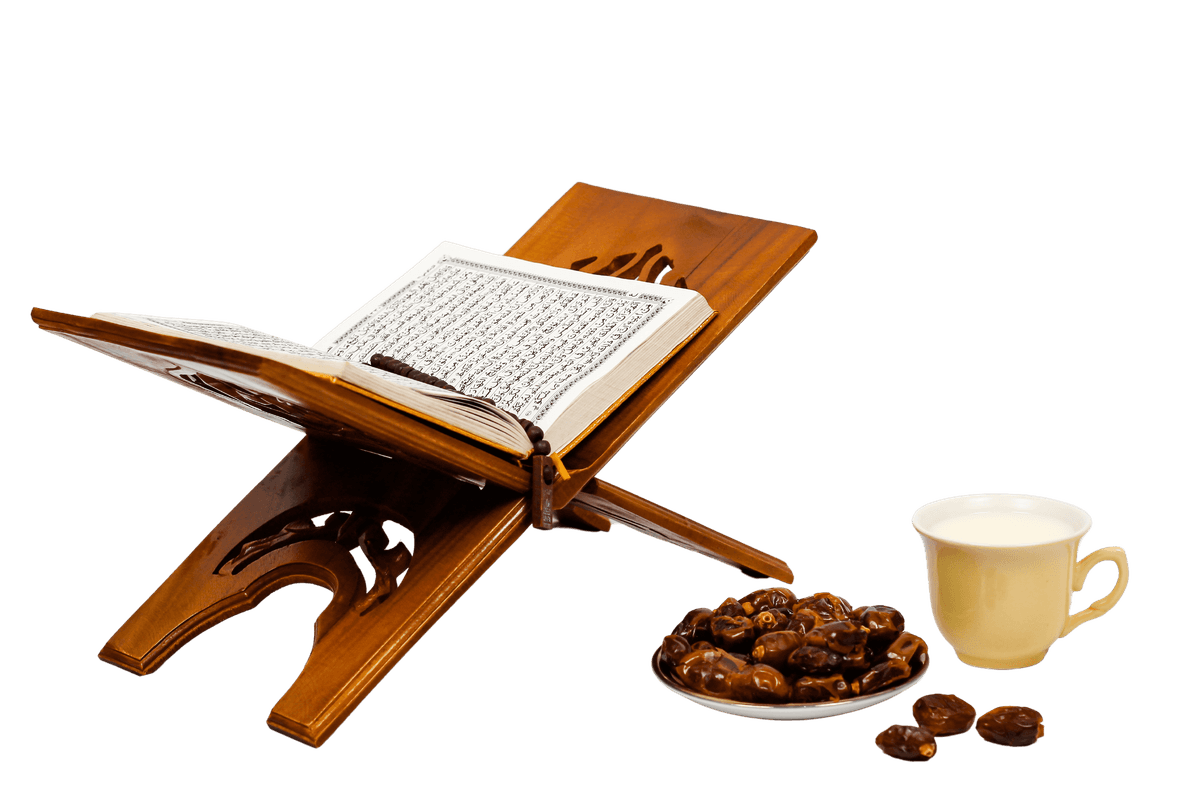
Read the Quran,
and study it.
The Mushaf text with its translation, recitation, memorization, and an assistant that answers your questions by quoting the verses.
Features
Read, listen, memorize, understand. Nothing else on screen.
The reader
Mushaf text with aligned translation, 13 reciters, word by word, four reading themes.
The assistant
Ask a question: it answers from the Quran, quoting the verses.
Memorization
Step-by-step Hifz mode, spaced reviews, daily goal and khatma plan.
A reader built for reading
Mushaf text, translation, audio recitation, memorization: everything is there, without clutter.


How it works
Ask your question
Write your question about a verse, a theme, or an idea.
The verses are gathered
The assistant receives the verified text of the verses concerned, never from memory.
Get a sourced answer
Every answer includes references so you can verify it yourself.
Sample analysis
This is what the analysis produces
The Throne verse (2:255), analyzed as in the app: the roots of the words, then the Quran explained by the Quran.
ٱللَّهُ لَآ إِلَٰهَ إِلَّا هُوَ ٱلْحَىُّ ٱلْقَيُّومُ ۚ لَا تَأْخُذُهُۥ سِنَةٌۭ وَلَا نَوْمٌۭ ۚ لَّهُۥ مَا فِى ٱلسَّمَٰوَٰتِ وَمَا فِى ٱلْأَرْضِ ۗ مَن ذَا ٱلَّذِى يَشْفَعُ عِندَهُۥٓ إِلَّا بِإِذْنِهِۦ ۚ يَعْلَمُ مَا بَيْنَ أَيْدِيهِمْ وَمَا خَلْفَهُمْ ۖ وَلَا يُحِيطُونَ بِشَىْءٍۢ مِّنْ عِلْمِهِۦٓ إِلَّا بِمَا شَآءَ ۚ وَسِعَ كُرْسِيُّهُ ٱلسَّمَٰوَٰتِ وَٱلْأَرْضَ ۖ وَلَا يَـُٔودُهُۥ حِفْظُهُمَا ۚ وَهُوَ ٱلْعَلِىُّ ٱلْعَظِيمُ
Allah - there is no deity except Him, the Ever-Living, the Sustainer of [all] existence. Neither drowsiness overtakes Him nor sleep. To Him belongs whatever is in the heavens and whatever is on the earth. Who is it that can intercede with Him except by His permission? He knows what is [presently] before them and what will be after them, and they encompass not a thing of His knowledge except for what He wills. His Kursi extends over the heavens and the earth, and their preservation tires Him not. And He is the Most High, the Most Great.
Surah 2:255, the Throne verse
Linguistic analysis
The verse opens with two inseparable names: al-Hayy (root ح-ي-ي, the Ever-Living) and al-Qayyum (root ق-و-م, the Self-Subsisting by whom all things subsist). The Quran pairs them only three times, always together: here, in 3:2 and in 20:111.
Then a double negation, neither drowsiness nor sleep (sina, then nawm), moving from the lightest to the deepest: even the briefest doze is ruled out before sleep is named. The vigilance described admits no degree and no lapse.
The mirror structure
What only appears when you read the verse from both ends at once: its nine clauses answer one another in pairs, in mirror image, around a single center.
At the center, the clause around which the other eight answer one another: "He knows what is before them and what is behind them".
The pairs can be read in the text of the verse. What they mean is a reading, not a fact.
Reference verses
- Surah 3:2 : the same pair of names opens Surah Al 'Imran: the text sheds light on itself through its own echoes.
- Surah 10:3 : "there is no intercessor except after His permission": what the Throne verse condenses into a single clause is stated there in full.
- Surah 20:110 : "Allah knows what is before them and what will be after them, but they do not encompass it in knowledge": the central clause of the Throne verse is repeated there word for word, followed by the same verb.
Conclusion
A construction that a line-by-line reading does not show, and that anyone can check against the text displayed. That is what the analysis does: it does not comment on the text from the outside, it lets its construction speak.
Every verse of the Quran can be analyzed this way, free to start.
Analyze your own versesWhat does the Quran say about…
- Patience
- Sadness and comfort
- Forgiveness
- Marriage
- Parents
- Gratitude
- Money and spending
- Justice
- Hope
- Death and grief
- Trust in Allah
- Prayer